


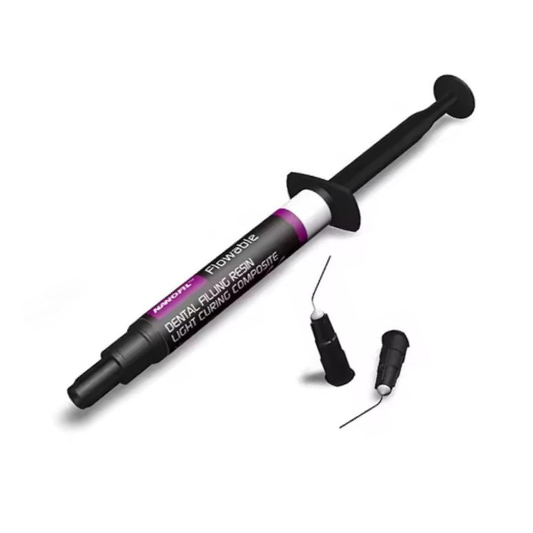
Available in a variety of tooth colors and packaged in convenient syringe delivery systems, Dental Filling Resin (Flowable) functions as a visible light-activated composite material with optimized flow characteristics derived from its low viscosity formulation.
With high quality products new energy, a wide range of use, perfectly match tooth color, low polymerisation shrinkage, excellent flowability, strong anti-wear ability and X-ray blocking property
This product is covered by a 12-month limited warranty effective from the date of purchase.
Our warranty applies to defects in materials and workmanship under normal clinical use.
What’s Included
Not Covered
How to Claim
Please contact our customer support team with your order number, issue description, and product photos. We will respond within 1–2 business days to arrange assistance.
Returns will be accepted for up to 30 days of Customer’s receipt or tracking number on unworn items. You, as a Customer, are obliged to inform us via email before you return the item, only in the case of:
– Received the wrong item.
– Item arrived not as expected (ie. damaged packaging).
– Item had defects.
– Over delivery time.
– The shipper does not allow the goods to be inspected before payment.
The returned product(s) must be in the original packaging, safety wrapped, undamaged and unworn. This means that the item(s) must be safely packed in a carton box for protection during transport, possibly the same carton used to ship to you as a customer.

450+ International Brands

100% Authorized Sourcing

Competitive Offers For Clinics

Hassle-Free Service Guarantee